Hydrogen, the new hype?

The number of published articles and funded research projects about hydrogen as an alternative energy fuel, seems to experience a growing interest in Norway within the last decade (Figure 1).
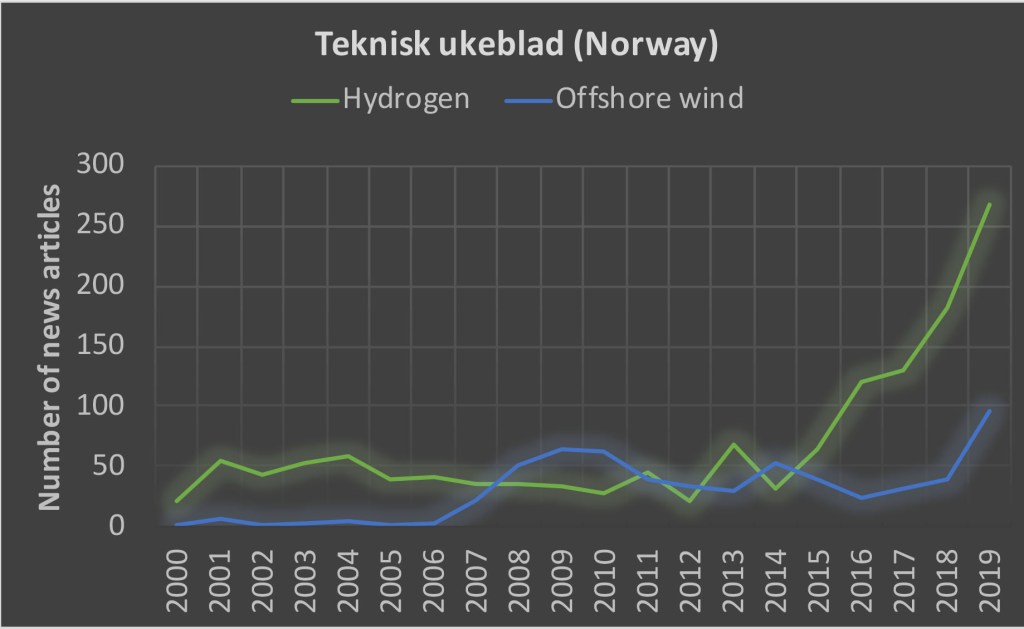
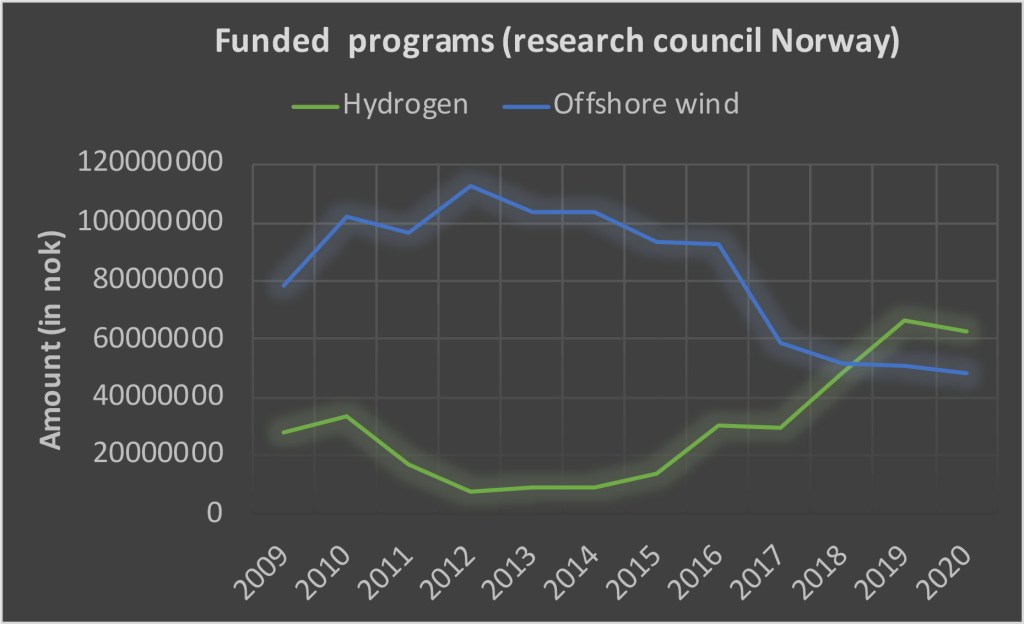
A concrete example of this general trend comes from the Norwegian shipbuilding company, Havyard, announcing a prototype for building a hydrogen-powered vessel [1].

So why is hydrogen gaining popularity, especially in Norway?

Hydrogen can be used as a fuel to produce electricity and move an electrical engine with zero GHG emissions. An additional–and important– advantage is that hydrogen can be stored and can be quickly refueled–improving the notable limitation of charging electrical batteries.

In order to generate electricity from hydrogen, a fuel cell is required. The fuel cell takes advantage of the chemical energy from hydrogen and, together with oxygen–obtained from air–,generates hydrogen ions and electrons which result in the generation of an electrical current that can then be used to produce work [2].

An illustrative example of how a putative hydrogen system would look like can be seen from the Havyard hydrogen-powered ferry model (Figure 2).
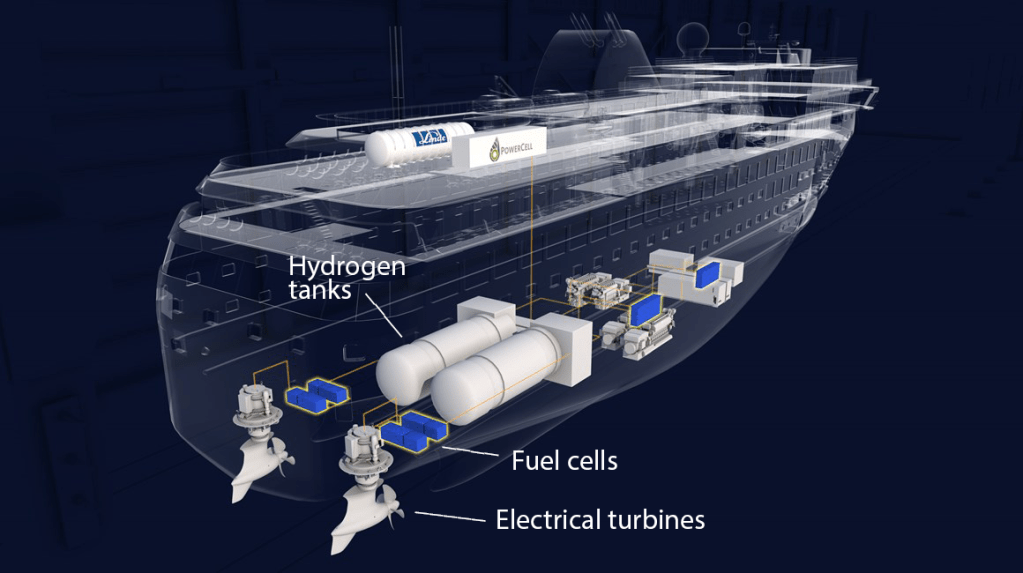
Figure 2. Hydrogen-powered prototype from Havyard. Image modified.

Hydrogen can be produced from several ways (Figure 3), yet the only null-GHG emission production comes from water electrolysis; consisting on splitting the water molecule (H2O) into its hydrogen and oxygen components. This process requires 50 kWh of electrical energy, approximately, to produce 1 kg of hydrogen [3] and it is seen as being a low efficiency process. This is why a famous technology entrepeneur referred to hydrogen as “bullshit” [4], as it is more efficient to directly charge electrical batteries than to use that electricity to produce hydrogen.
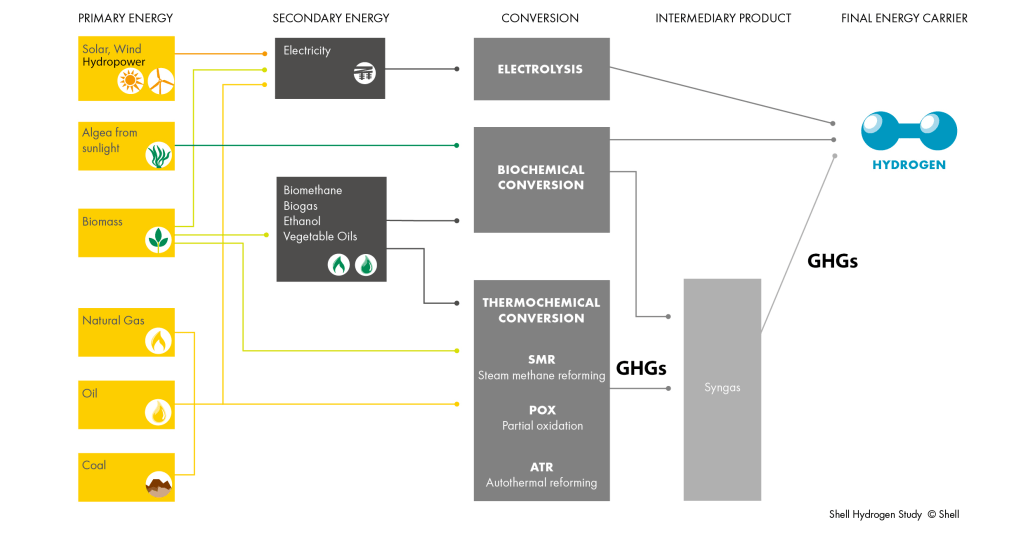
Figure 3. Diagram showing the different origins and steps to produce hydrogen. GHGs: green house gases. Modified

Despite Elon Musk’s blunt statement being true for the use of hydrogen in domestic vehicles, it might not be as a disadvantage for the case of maritime transport where electrical batteries are limited for i) its capacity to cover the long-distance trips cargo vessels do and ii) its long recharging times.

An interesting avenue for electricity-generated hydrogen is its coupling to renewable energy generation when there are electricity surpluses. This would be a good way for coping with the intermittent nature of renewables and not wasting electricity when it is not consumed. Surpluses in electricity can be used to produce hydrogen by electrolysis and store it for later use.

Today, however, 90% of hydrogen originates from fossil fuels–being steam reforming of natural gas the largest used method–releasing CO2 into the atmosphere. The CO2 emitted through this process is confined within an industrial framework and potentially easy to capture with the development of new technologies for Carbon Capture and Storage. Therefore, another interesting avenue for clean hydrogen production would be through the coupling of CO2 capture and storage to hydrogen production. The main challenge is to find compatible technologies that both yield high-purity hydrogen and can capture CO2 efficiently and at a reasonable cost [5]–equally important is finding suitable storage mediums for the captured carbon. Today, the main pathway appears to be oil and gas reservoirs [6]. This is already done to increase the reservoir pressure and thereby increasing the yield of oil or gas.

An issue concerning hydrogen is its storage; as hydrogen is a very low-density gas and therefore requires compression and other specialized forms of storage (such as liquefaction) to achieve desired energy densities. This also represents another energy loss to the energy cost of compression.

Hydrogen is also highly flammable; startling examples of the past [7] and others more recent [8] exemplify this intrinsic characteristic. Therefore, care should be taken when designing hydrogen infrastructure.  

A transition to renewable energies not only concerns peak-oil and climate change but also public-health: fossil fuels (coal and oil, in particular) are the highest sources among deaths by air contamination per TWh of energy produced (Figure 4).

In Norway, the high traffic of diesel-driven ferries cruising the western fjords has resulted in strong local air and water contamination [9].
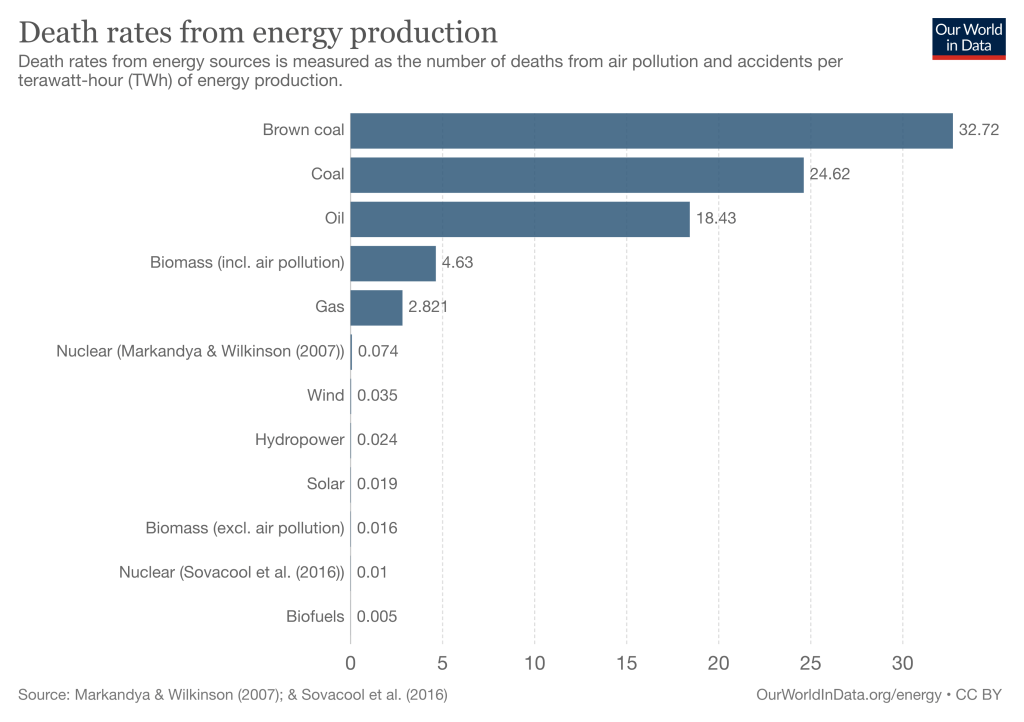
Figure 4. Death rates by air-pollution per TWh energy production shown for different energy sources.

A shift towards clean energies not only implies an improvement in air quality–as in this example–but in all the elements of the ecosystems we live in; with a direct impact on human health.

Overall, Norway seems, again, to be in the avant-garde of the renewable energy transition; betting heavily for all possible paths towards a more environmental-friendly future.

GLS


[1]      Havyard, “https://www.havyard.com/news/2019/prototype-for-hydrogen—one-step-closer/,” 2019.

[2]      Wikipedia, “https://en.wikipedia.org/wiki/Fuel_cell,” 2020.

[3]      R. Bhandari, C. A. Trudewind, and P. Zapp, “Life cycle assessment of hydrogen production via electrolysis – A review,” J. Clean. Prod., vol. 85, pp. 151–163, 2014.

[4]      Amar Toor, “https://www.theverge.com/2013/10/23/4946858/elon-musk-thinks-hydrogen-cars-are-bullshit,” theverge.com, 2013.

[5]      M. Voldsund, K. Jordal, and R. Anantharaman, “Hydrogen production with CO2 capture,” Int. J. Hydrogen Energy, vol. 41, no. 9, pp. 4969–4992, 2016.

[6]      Christina Benjaminsen, “https://www.sintef.no/en/latest-news/this-is-what-you-need-to-know-about-ccs-carbon-capture-and-storage/,” http://www.sintef.no, 2020.

[7]      Wikipedia, “https://en.wikipedia.org/wiki/Hindenburg_disaster,” 2020.

[8]      “https://www.aftenposten.no/okonomi/i/naVRr5/foreloepig-rapport-lekkasje-var-aarsaken-til-eksplosjon-paa-hydrogenstasjon-i-sandvika,” Aftenposten, 2019.

[9]      Odd Roar Lange, “https://www.dagbladet.no/tema/cruiseverstingene-dropper-norske-fjordperler-etter-dette/71391279,” Dagbladet, 2020.
Electrification of offshore oil and gas platforms

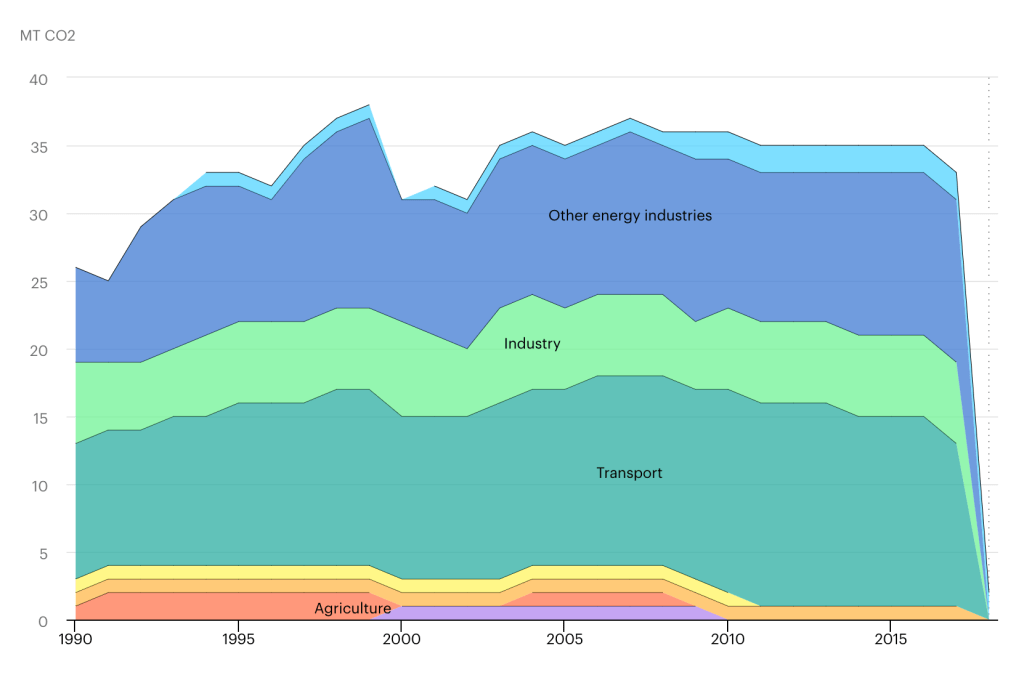
As stated in the website of the Norwegian climate and environment department; Norway’s government is committed to reduce by 40% its greenhouse gases (GHG) emissions by 2030–today being slightly below 35 million tons of CO2[1] (Fig.1)–and reach almost carbon-neutrality by 2050 [2]. This means that Norway will have to reduce 14 million tons of its CO2 emissions by 2030.

Figure 1. Total CO2 emissions by sectors from Norway as shown from the IEA.

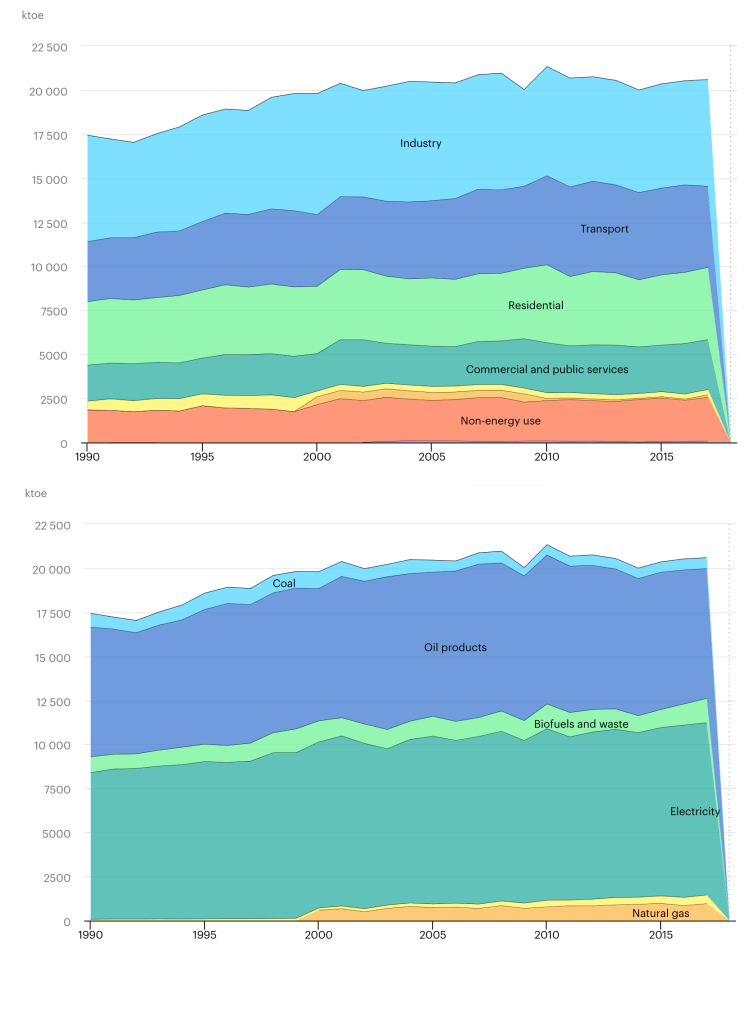
The Norwegian energy consumption profile by sectors and energy source looks like this (Fig. 2):

Figure 2. Total energy consumption from Norway as shown from the IEA by sectors (up) and energy source (down).

The question that arises, therefore, is how does Norway plan to achieve this ambitious–yet necessary–goal? The strategy, on paper, seems clear:  to reduce the consumption of carbon-emitting combustibles. However, in today’s heavily energy-dependent economy and society, this is not so easily achievable.

Renewable energies, therefore, are set to play an important role for achieving the required reductions in GHG emissions.

Norway’s hydrological resources together with a small population makes it the top-one country in relative hydroelectricity consumption–that is; nearly all electricity consumed in Norway comes from clean-energy (hydropower) production.

In 2018, Norway produced 144,1TWh of electricity from hydropower and consumed 122,2TWh from its 244TWh total yearly energy consumption [3], [4]–fossil fuels providing the remaining energy share. The renewable energy growth, thus, must close the gap as well as cover the significant fraction of energy produced by non-renewable combustion (Figure 2) together with the expected growth in energy-need for the next decade.

This requires improvements on multiple fronts. From obvious green initiatives such as introduction of additional renewable energy, to light- green initiatives where we only reduce the GHG emissions by changing to less GHG emitting energy forms; such as from coal to gas.

Equinor, the Norwegian oil company (known before as Statoil),  recently announced the discovery of a new oilfield (named Johan Sverdrup) 140km from the west-coast of Norway [5] and stated, at the same time, to be committed to meet the climate goals of Norway by claiming to exploit this new oilfield using renewable-generated electricity–in contrast to the previous gas-powered offshore platforms–thereby, reducing their emissions in oil-extraction.  

It is not clear, though, i) how many of Equinor’s oil-platforms will be run by renewable-energy generated electricity, ii) if Norway has enough electricity capacity/potential to power all of its oil-exploitations with CO2-null emitting technologies and last iii) if the total net global balance of CO2 will actually be reduced.

Of these, the latter question is perhaps the most interesting and has been thoroughly investigated in the literature [6]. The general conclusion is that a significant net- positive effect heavily depends on the origin of the replacement power (electrical).

With this, we must distinguish the following scenarios: at the national level, emission reductions are greater due to the high fraction of renewable energy (hydroelectricity) in the norwegian electrical grid. However, the local offshore emission savings are shifted abroad as the electrification of local platforms will reduce the access of total hydroelectrical power in the common electrical grid (Europe, in this case). As such, the overall net- reduction is significantly less compared to the national reduction and is generally limited to the difference in the averaged CO2 emissions/kWh from the European energy mix (approximately 270g CO2/kWh [7]) and the emissions from the less efficient on-site offshore gas turbines. Additionally, one must account for the electrical losses associated with transmission when the electrical generation is off-site.

This is well represented in Figure 3 which describes the life-time CO2 emissions- both national and overall in the context of electrification of the Dagny and Draupnel/Luno project in Norway (taken as an illustrative example).

Figure 3. CO2 emissions over time in different scenarios. Modified from [6].

An additional point is the effect of increased gas export. If oil and gas companies now power themselves with renewable-generated electricity or from the electrical grid, they will, in theory, have a surplus of oil and gas to sell in the energy market; it can be speculated that the increased access to gas will reduce its price and thereby displace coal energy in the common European market.  This principle, however, becomes less true as coal is phased out from the energy market and renewables phased in. Despite this, it should be noted that shifting the emissions associated with electrical power generation from an offshore gas turbine to an onshore high efficiently gas power station will contribute to a net-positive effect.

All in all, there are multiple factors influencing the global energy market and its derived CO2 emissions.

For the case of Norway meeting its future climate goals; they ought to obtain energy from other null-emitting technologies such as wind-power generation or an optimal combination of the strong and weak points of the different renewable-technologies (which we hope to explore in future posts).

The number of climatic and natural disasters is on the rise; the Australian fires caught the world eye not only for its magnitude in extension–greater than the Amazonas fires–but for the tremendous ecosystem loss; recently, an unusual strong storm hit the Catalan coast-line in Spain causing several material and natural damages. We are, therefore, faced with the challenge of designing better and more environment-respectful strategies and technologies which will require a global common effort.

GLS


References

[1]        IEA, “International Energy Agency.”

[2]       K. Miljødepartement, “Klimastrategi for 2030 – norsk omstilling i europeisk samarbeid,” vol. 41, 2017.

[3]       Olje- og energidepartament, “Energi Fakta Norge.”

[4]       SSB, “Statistisk sentralbyrå (Statistics Norway).”

[5]       Equinor, “https://www.equinor.com/no/what-we-do/johan-sverdrup.html,” 2020.

[6]       Econ Pöyry, CO2-emissions effect of electrification. 2011.

[7]       European Environment Agency, “European Environment Agency,” 2020.